How Does Meta Ads Work in 2026? (Andromeda Explained)
Short answer: In 2026, Meta ads work by letting an AI system read your creative and predict who is most likely to respond, rather than letting you hand-pick an audience. You give Meta a clear goal, strong creative, and clean conversion data. Meta then scans millions of possible ads, shortlists the ones most relevant to each person, and competes for their attention in a real-time auction. Your creative is now your targeting. Your tracking is now your training data.
If that already sounds different to the Meta ads you remember, it is. The way Facebook and Instagram ads are delivered changed more between 2024 and 2026 than in the previous decade combined. Most business owners never saw the change announced. They only felt the symptoms: leads that got more expensive, performance that swung for no obvious reason, and old tactics that suddenly stopped working.
This guide explains how Meta ads actually work now, in plain English, so you understand the game you are really playing.
What changed: the Andromeda era
For about ten years, Meta advertising was a targeting game. You picked interests, demographics, and lookalike audiences, and you tried to out-guess the platform by slicing your audience thinner and thinner. The advertiser who defined the most precise audience usually won.
That model is gone.
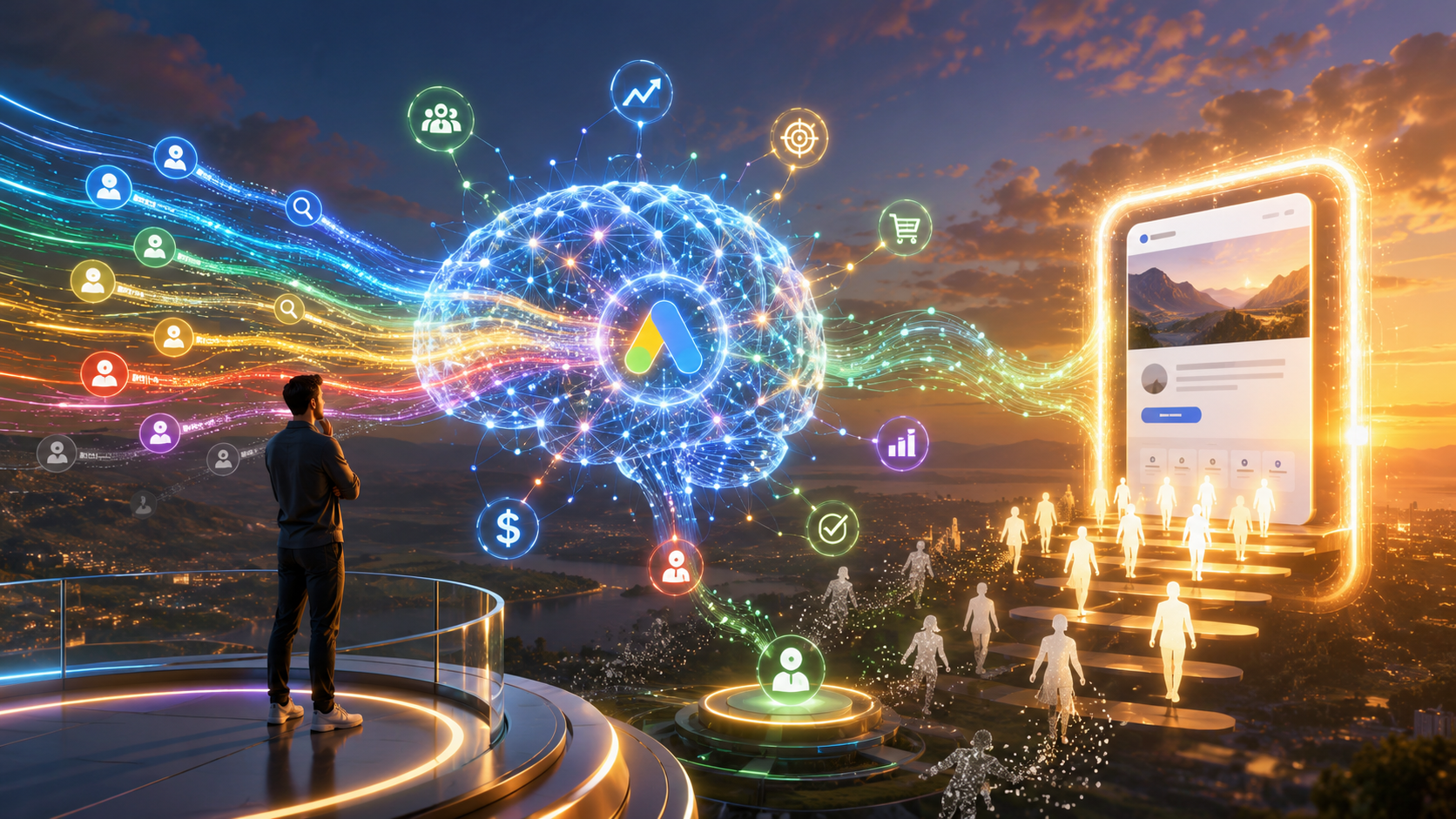
On 2 December 2024, Meta announced a new ad delivery engine called Andromeda. Through 2025 it rolled out across most objectives and placements, and by 2026 it is the system running underneath nearly every campaign on Facebook and Instagram. Andromeda was built to solve a problem the old system could not handle: the explosion of creative. Once AI tools let advertisers generate thousands of ad variations, the old way of selecting ads could not keep up, so Meta rebuilt the core of how ads get chosen.
The shift in one line: Meta used to ask "who should see this ad?" Now it asks "which ad should this exact person see right now?"
How a Meta ad actually gets delivered, step by step
When someone opens Instagram or Facebook, a decision happens in milliseconds about which ad to show them. Here is what is really going on under the hood in 2026.
- Retrieval (Andromeda). Andromeda is Meta's ads retrieval system. Its job is to scan tens of millions of eligible ads and shortlist the few thousand most likely to resonate with that specific person, before the auction even begins. This stage decides which ads get a chance to compete at all.
- Reading your creative. Andromeda uses computer vision and audio analysis to actually "look at" and "listen to" your ad, then assigns each ad an identity based on its visual and conceptual pattern. This is why near-identical ads are a trap: if you upload twenty ads with the same background, format, and hook, Meta can read them as one ad and give you a single ticket into the next round instead of twenty.
- Ranking and intent prediction. Once the field is shortlisted, a ranking layer predicts how likely each person is to take the action you care about: the click, the lead, the purchase.
- The auction. Only now do bids enter the picture. Meta runs an auction, but it does not simply pick the highest bidder. It picks the ad most likely to get the best result for that individual at a sensible cost. Relevance and predicted action beat raw spend.
The headline takeaway: creative quality and relevance now matter before bidding even starts. If your creative does not make the shortlist, your budget never gets a say.
Creative is the new targeting
This is the single most important thing to understand about how Meta ads work in 2026.
Meta reads your creative to decide who sees it. A video built around a Sydney homeowner lowering their power bills tells Meta exactly which behavioural cluster to chase. A testimonial from an ambitious parent tells it something different. You are no longer choosing the audience in the settings. You are describing the audience through the creative, and Meta finds the people who behave like the ones it is built for.
That has three practical consequences:
- Identity-led creative wins. The clearer the identity signal in the ad, the sharper Meta's delivery.
- Diversity of angle beats volume of clones. A handful of genuinely different concepts gives Meta more pockets of people to find. Sameness starves the system.
- The first three seconds carry the ad. If the hook does not stop the scroll, the ad never earns cheap reach, because engagement is part of how Meta sorts and prices delivery.
Most businesses still lose money on Meta because they are optimising the wrong layer. They tweak audiences and budgets while running tired, same creative. In 2026, that is backwards.
Why your signals decide your cost per lead
Here is the part almost nobody gets right, and the part that quietly separates the cheap accounts from the expensive ones. In the old world, tracking told you how many leads you got. In 2026, it tells Meta who became a lead so it can find more people like them. Your conversion data is not a report. It is the training data for the machine. The rule is brutally simple: the cleaner the signal, the cheaper the lead.
This is also why so many accounts "randomly break." Performance rarely collapses because the ads got worse. It collapses because a signal broke quietly in the background, and the owner spends weeks fixing the wrong thing. When your cost per lead jumps, do not ask what is wrong with the ads. Ask what signal broke.
There is a specific, founder-level way to set this up so your signals stay clean and your costs stay down. It is the part of the system most businesses get wrong, and it is laid out step by step in The Meta Ads Playbook.
Campaign structure in 2026: simpler wins
Because Andromeda needs rich, undivided signal to learn, fragmentation is now your enemy. The accounts that win in 2026 are almost always simpler than the ones that lose. Dozens of ad sets and layered audiences split your data into pieces too small for the machine to learn from, and the system charges you for the confusion.
Most businesses have this backwards. They add complexity when results dip, when simplifying is exactly what the platform is begging for. The precise structure that gives Andromeda what it needs, and the order to build it in, is covered in the guide.
A quick word on lead forms
If you run lead campaigns, remember that Meta traffic is low intent by nature. People are mid-scroll, not mid-search. That single fact changes how your form should be built, and getting it wrong is why so many businesses drown in junk leads that never answer the phone. There is a simple way to filter for quality without killing your volume. The Meta Ads Playbook shows you the exact approach.
So, how does Meta ads work in 2026? The summary
Meta ads work by handing the targeting decision to an AI that reads your creative, predicts who will respond, and competes for their attention in a live auction. Your job is no longer to out-guess the audience settings. Your job is to give Meta three things: creative that clearly signals who it is for, one clean conversion event it can trust, and a structure that does not fragment the data. Do that and your costs settle, your leads become predictable, and scaling stops feeling like a gamble.
That is the difference between businesses that burn money on Meta and businesses that quietly run the cheapest, most reliable accounts in their market.
Want the complete, do-it-yourself system? The Meta Ads Playbook takes everything above and takes it a step further: how to build creative that targets for you, the exact signal setup that lowers your cost per lead, the lead-form qualifier strategy, and how to scale without blowing up your account. It is the same thinking I apply when real money is on the line, for the price of a couple of coffees.
Frequently asked questions
How does Meta ads work in 2026?
Meta ads work on an AI delivery system called Andromeda. You set a goal, upload creative, and provide clean conversion data. Meta reads your creative, shortlists your ads against millions of others for each person, predicts who is most likely to act, and competes for their attention in a real-time auction. You no longer hand-pick the audience. The creative and the data do the targeting.
What is Meta Andromeda?
Andromeda is Meta's AI-driven ads retrieval engine, announced in December 2024 and rolled out through 2025. It sits before the auction and narrows tens of millions of possible ads down to a relevant shortlist for each individual user. It is not a button or a campaign type you click. It is the system working behind the scenes.
Is creative really the new targeting on Meta?
Yes. Under Andromeda, Meta reads your ad's visuals, audio, and message to decide who sees it. Detailed audience settings are now treated as loose suggestions rather than hard rules, so the strongest lever you control is the creative itself.
Do I still need interests and lookalike audiences?
For most accounts in 2026, no. Broad targeting paired with strong, varied creative now outperforms tight interest stacks and lookalikes, because the system's behavioural signals already exceed what a seed audience can define.
Why are my Meta ads suddenly getting more expensive?
Usually one of three things: your creative has gone stale and too similar, so Meta reads your ads as one entity; your structure is too fragmented for the system to learn; or, most commonly, a tracking signal has broken. Check your signals before you touch the ads.
What is the Conversions API and do I need it?
The Conversions API (CAPI) sends conversion data to Meta from your server, rather than relying only on the browser. In 2026 it matters because the accuracy and completeness of your conversion data directly drives how quickly and how cheaply Meta learns. Clean data is no longer optional.
How many ads should I run at once?
Variety matters more than volume. A focused set of genuinely different concepts beats a large library of look-alike ads, because near-identical ads can be read as a single entity and end up competing for one slot rather than many.
How long until Meta ads start working?
Most campaigns need a short learning period, often a week or two, while the system gathers enough conversion signal to deliver consistently. The biggest mistake is panicking and resetting during this phase, which forces Meta to relearn from scratch.
Are Meta ads worth it for small businesses in 2026?
Yes, when run deliberately. The shift to creative-led, AI-driven delivery actually favours small, fast, authentic businesses that can produce honest, identity-led creative quickly, something big brands struggle to do. The businesses that lose money are the ones still running Meta like it is 2019.
Can I learn to run Meta ads myself?
Yes. The mechanics are more learnable now than ever, because the platform rewards clarity over technical tricks. A focused guide like The Meta Ads Playbook walks you through the creative, signal, form, and scaling system step by step so you can run profitable campaigns without an agency.
Book A Session With A Sydney-Based Digital Marketing Expert.
I work with a limited number of clients to keep quality high and focus sharp. If you’re ready to grow and want to see if we’re the right fit, fill out the form and let’s start the conversation.
More Insights & Strategies