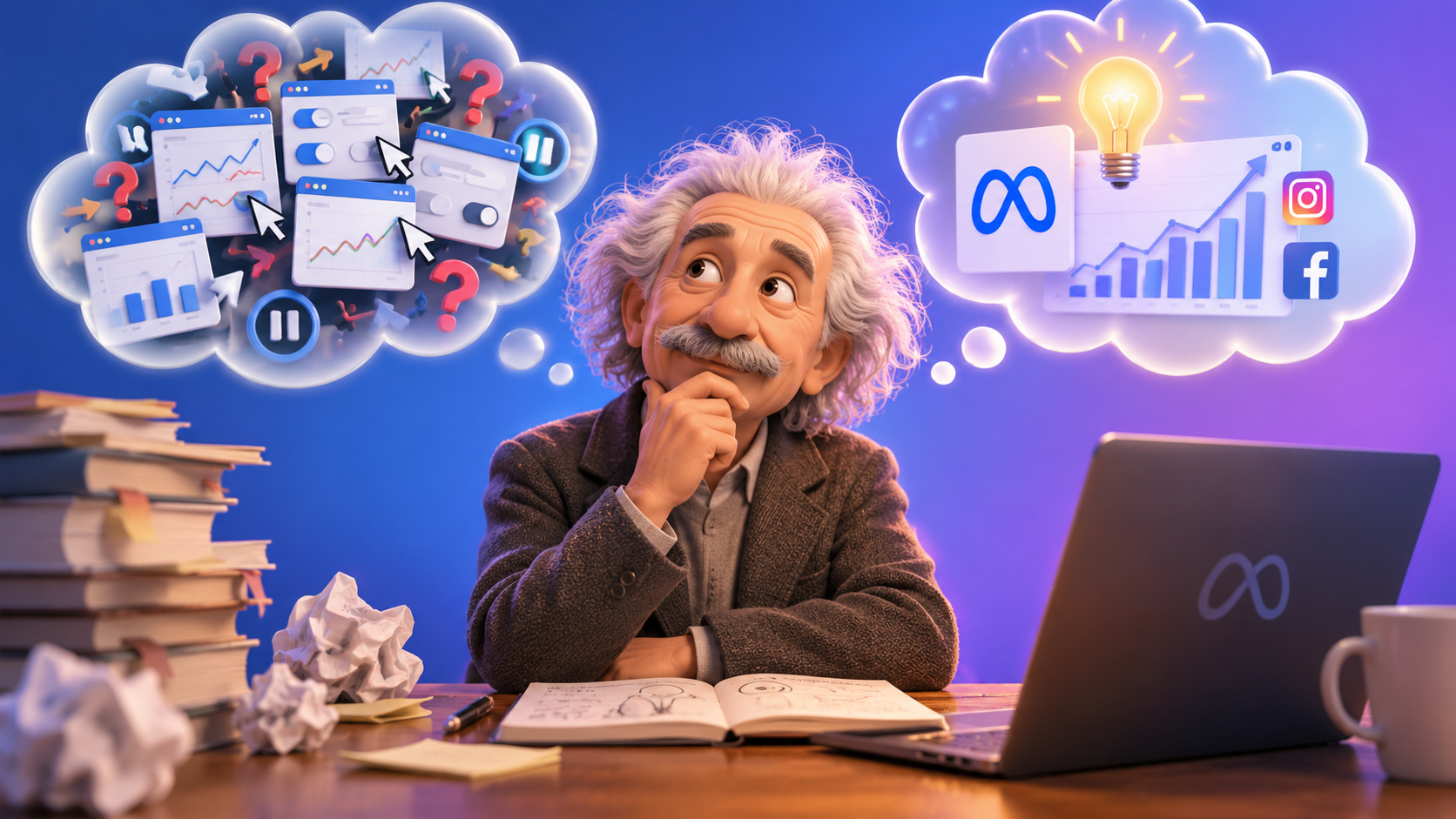
AI Is Your Assistant, Not Your Brain
AI Is Your Friend. But You Still Need to Think Critically.
Artificial intelligence is one of the most powerful productivity tools ever created.
It can write content.
Analyse data.
Generate ideas.
Build code.
Summarise research.
For marketers, founders and operators, it’s like having a super-productive teammate available 24/7.
But here’s the truth most people overlook:
AI is a tool. Not a thinker.
And the people who treat it like an oracle will eventually run into problems.
The people who use it as an assistant while applying strong critical thinking will get the real advantage.
AI Predicts. It Doesn’t Understand.
Large language models don’t actually know things. They predict the most statistically likely next word based on enormous training data.
That means AI can produce answers that sound extremely confident, even when they are incomplete or wrong.
This is why blindly copying AI outputs can lead to:
- Incorrect facts
- Weak strategy
- Generic marketing
- Shallow analysis
AI is excellent at producing possibilities.
Humans still need to judge whether those possibilities are good.
The Real Skill Is Asking Better Questions
The quality of AI output depends heavily on the quality of the prompt.
If you ask vague questions, you get vague answers.
If you ask strategic questions, you get far better output.
For example:
Weak prompt:
“Write Google Ads copy.”
Better prompt:
“Write high-conversion Google Ads copy targeting homeowners considering solar batteries in NSW who are worried about rising electricity costs.”
The difference is thinking before prompting.
AI amplifies your thinking — good or bad.
AI Makes Average Work Faster
One risk of AI is that it makes mediocre work incredibly efficient.
Generic blog posts.
Average ad copy.
Basic landing pages.
These can now be produced at massive scale. Which means the internet is about to be flooded with more average content than ever before.
The businesses that stand out will be the ones that combine AI with:
• Real expertise
• Real experience
• Real opinions
• Real strategy
In other words: human thinking.
The Best Use of AI: A Thinking Partner
The smartest professionals are using AI like a sparring partner, not a replacement.
They use it to:
- brainstorm angles
- challenge assumptions
- explore multiple approaches
- speed up research
- refine ideas
Then they apply judgement to decide what actually makes sense.
Think of AI as:
An extremely fast intern with access to the internet.
Useful? Absolutely.
But you still need to supervise the work.
Critical Thinking Is Becoming More Valuable
Ironically, the rise of AI makes human thinking more valuable, not less.
When everyone has access to the same tools, the real differentiator becomes:
- taste
- judgement
- strategy
- experience
The ability to ask:
Is this actually correct?
Does this make sense?
Is there a better approach?
That’s the skill that will separate the average operators from the great ones
Book A Session With A Sydney-Based Digital Marketing Expert.
I work with a limited number of clients to keep quality high and focus sharp. If you’re ready to grow and want to see if we’re the right fit, fill out the form and let’s start the conversation.
More Insights & Strategies